Total Pageviews

Monday, December 17, 2012

The Maze Runner by James Dashner Book Review


             The Maze Runner begins with a boy named Thomas standing in an elevator going up a shaft. When the elevator reaches the top he is pulled out of it into a large room about the size of four football fields with a house, a garden, woods, and an animal farm in each one of the four corners of the room. Thomas is told by the other boys there that the Glade, what they call the big room, is in the middle of a huge maze which they have been trying to survive and find a way out of. The next day a girl is sent up the shaft to the glade carrying a message that says she is the last person coming up ever and Thomas decides that he would like to help find the way out of the maze by becoming a runner. Then that night Thomas is stuck outside of the walls of the glade and forced to spend the night in the maze after he tries to rescue some other boys who came back to the glade too late in the day. After Thomas and the boys survive the night he is treated with awe by the other boys because there are creatures called "grievers", balls of skin and knives, that come out at night and Thomas saved the other boys with him from them. The boys' need to find a way out begins to become urgent after the sun in the sky of the glade disappears. After the attempts to find a code in the maps of the maze are stepped up they find that the maze spells the words float, catch, bleed, death, stiff, and push and that there is a hole in the sky floating near the cliff edge of the maze that the grievers disappear into. Thomas gets himself stung by the grievers and remembers that if they get into the room that the hole leads to then they can type in the code they found and escape. After finding that out they decide to do so because the doors to the glade no longer shut and the grievers are attacking them during the night. They charge through the maze and battle the grievers to get into the hole where Teresa, the girl who came the day after Thomas arrived, finds the button to shut down the maze.
                Thomas is described by Chuck, a character in the book. "I'd say you're sixteen. and in case you were wondering, five foot nine… brown hair. Oh, and as ugly as fried liver on a stick". Thomas has an urge to help others, demonstrated in the book by his wish to become a runner, even when he knows the dangers and risks, and by when he ran out into the maze to save Minho, a maze runner, and Alby, their leader, when they are about to be trapped outside the glade "Thomas knew he had no choice. He moved. Forward. He squeezed past the connecting rods at the last second and stepped into the maze." Some people would call Thomas's urge to help people self destructive and it seems to increase after he develops a relationship with Teresa. Theresa and Thomas share a telepathic bond, with them being able to share thoughts and carry out verbal conversation in their mind. This, and the fact that even though both have had their memories erased they seem to know each other begins to make them closer than either is with any of the other gladers.
                The theme of this book is that hope survives in the strangest of places. In the text it says that "The maze was never meant to be solved" and even though they know that, they still persist in attempting to find an exit. They would have never even tried for two years to solve the maze by running if they did not have hope that it could be solved by doing that.  I have been swimming for over six years now and at first I was not very good, but I stuck with it because I had hope that I would get better at it. When the boys decide to one, last ditch effort to get out of the maze, they only do that on the hope that the maze will allow them to escape.
                 The Maze Runner plays with some interesting ideas regarding freedom and memory. All of the boys stuck in the maze have had their memories taken away, with no idea of how they got in the maze or even any idea of the details of the world outside the maze. The only way the boys can get their memories back is to be stung by a griever and get what the boys call "the grief serum"- a sort of antivenin that counteracts the griever poison. There is a catch though- going through the process of being stung and recovering is incredibly painful. What was really interesting was that the boys who did get their memories back were not always that happy about remembering. After Ben recovered from the griever sting he went crazy and tried to kill Thomas, and after Alby recovered his memories he became very glum because the world outside the maze is apparently destroyed by a disease called "the flare" and actual solar flares. The book asks the interesting questions like "What would you do for your memories?" and "What would you do if they are not what you expected?".
                I really liked reading The Maze Runner because you think it should be a science fiction novel because of the setting, but it is actually more of a mystery story. I kept reading the book because I wanted to find out why they are in the maze, and if the group would escape. The Maze Runner relies on suspense, not some overarching theme like a science fiction novel would. I really enjoyed reading this book and would heartily recommend it to anyone who asks, but anyone who enjoys a mystery should pick this up as well. The Maze Runner was a fun read.

I got the cover picture from here.
I got the maze picture from here.

Sunday, December 16, 2012

Lord of the Flies by William Golding Book Review


                In Lord of the Flies a group of boys crash land on a tropical island. The first thing they do is to find a conch and use that to gather them together at an assembly where they elect a chief, Ralph. As time passes Ralph begins to clash with another boy, named Jack, over priorities on the island, with Ralph wanting rescue and Jack wanting to hunt pigs on the island. Then, during a feast of pig, the group begins to imagine that a boy named Roger is a monster, and they kill him. Later in that evening Jack is so happy over the imaginary killing of the beast that he makes a bid for the chieftainship and after it fails Jack splits from the main group, taking about half of the older boys with him. Ralph is left on one side of the island and after about two days they decide to walk to the other side of the island to try to reason with Jack's crew.  Once there, an altercation ensues and Piggy, a member of Ralph's lot, is killed and the other two boys with Ralph, twins, are captured and forced to change allegiances. Ralph is left with no followers and Jack attempts to hunt and kill him, eventually setting fire to the entire island in an effort to do so. In the midst of the hunt a naval officer arrives on the island and rescues the boys, but not before the noticing the consequences of the boys actions on the island.
                Ralph is one of the most interesting people in the book, in the beginning he starts as a leader, approaching it with an air of fun and anticipation, but later on the decisions he has been forced to make begin to weigh on him. Ralph is forced to see both sides of the coin in life on the island, much earlier than the other boys. In the book he is described as a well built boy of about twelve, with the shoulders of a boxer but also a kind face. The other boys think of him as their leader, with Piggy saying "You're chief, Ralph. You remember everything." Jack, the other power on the island, does not like Ralph, because Ralph and Jack stand for very different things. Jack thinks in the short term, with the priorities of hunting and meat, while Ralph thinks for the long term, with the priorities of survival and rescue.
                In this book Ralph comes across as a paragon of democracy on the island, with the polarization of  Jack and Ralph becoming apparent in their moral differences in the latter part of the book. Ralph's cleanliness is a kind of metaphor for the morality of their collective actions, because as Ralph gets dirtier and dirtier the actions of the boys also get increasingly horrific. Later in the chapter even Ralph takes part in the quintessential activity of the Jacks lot, hunting, with Ralph beginning to become not just physically unclean, but morally unclean as well.
                In Lord of the Flies there is a theme of the savageness of humanity being just barely contained by civilization. To begin with, the time period of the book reinforces this, with a nuclear war in the background of the book showing how humanity would destroy itself given the chance. On the island the boys begin originally with grand intentions of democracy and prospering on the island, but as time wears on the thin veneer of civilization wears off., and in the world today people are a lot meaner when they think no one else is watching. The character of Roger is a bit of a sadist, and in one section of the book he tries to hit a "littlun", what they called the little kids on the island, with a rock but he still carries some of the rules of civilization so he never actually hits him. "Yet there was a space around Henry, perhaps six yards in diameter, into which he dare not throw. Here, invisible yet strong, was the taboo of the old life." In the end though the character of Simon sums up best how all the problems of the boys on the island were caused by themselves when he says this, "What I mean is… maybe it's only us."
                I enjoyed reading Lord of the Flies because it shows civilization in microcosm with all it's difficulties shown. It is a wonderful adventure story, with a gripping tale of survival, even though the problems faced are not from nature, but from the boys themselves. Lord of the Flies is a great book.

I got the book cover from here.
I got the other one from here.

Heart of Darkness by Joseph Conrad Book Review


               Heart of Darkness opens with the main character, Charlie Marlow, as a young man, returned from a sea voyage. He takes a job with a company that works to find ivory in Africa. Charlie sails south, and arrives at the main trading post of the company. He then has to wait there for rivets so he can repair the steamship he will captain, and after they arrive he sets sail on a voyage into the heart of Africa to resupply the trading post of a man named Kurtz. When he arrives at Kurtz's he discovers that Kurtz had been slaughtering natives for ivory and acting like a sociopath. They take Kurtz onto the ship, for he had become ill and on the journey back to civilization Kurtz dies of his illness. After Charlie returns to civilization he brings the news of Kurtz's death to his widow.
                You can see Marlow begin to lose some of his humanity on the voyage. As he sails deeper into the heart of Africa it is a metaphor for him sailing deeper into the darkness of his own soul. Even before he casts off, he is delayed in the first station waiting for rivets. The whole episode just shows how the people who are trading for ivory are making it harder for themselves. In the midst of Charlie's journey the boat comes under attack by some of the indigenous people and a group of people on the ship return fire. Charlie describes it as "squirting lead into that bush(63)" and it begins to show how he is beginning to feel disillusioned over the pointless voyage that he is on. Near the end of the story Marlow has to force Kurtz to get on the ship and head back to civilization and it goes to show how Charlie has decided to cut his losses, both literally with Kurtz, and morally as well, by refusing to have more unnecessary deaths on his hands.
                I think the theme of the book is that man is inherently evil, that we all have a heart of darkness and only societies mores are holding us in check, for when Kurtz is around other Europeans he talks of fine things such as progress and civilizing forces, but when he is left alone with the native people in the jungle he takes to raiding, burning and looting villages in the name of ivory. The book mentions the words heart of darkness, etc. at least 20 times. In the world today you see a lot of senseless destruction and violence on the news and in the media in general. During our evolution as a species violence was necessary for survival, for example hunting, and self defense, but even though these are no longer necessary to live in most scenarios  we can't give up the instinct itself, it is hardwired into everyone.
                This book uses the language of an earlier era. When reading early on in book I was intrigued when it used the words such as "niggers" and "savages" when referring to the indigenous African population. Those words have almost died out in common speech because as our society has grown more tolerant of people of different backgrounds and as all people, of all races, have a say in our nations affairs.
                I enjoyed the plot of the book, but the writing itself seems a bit obfuscating. While reading I thought that Kurtz died about halfway into the book and continued to think that until Charlie actually met Kurtz. I would definitely not recommend this book to everyone. The writing is complex and confusing and many of the words used in this book would offend a large swathe of the population. Even with these drawbacks the book offers a look into the lengths men will go to to for the darkness of their hearts.

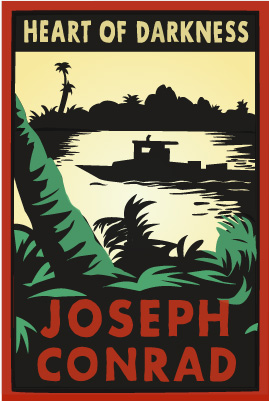
I got the cover picture from here.
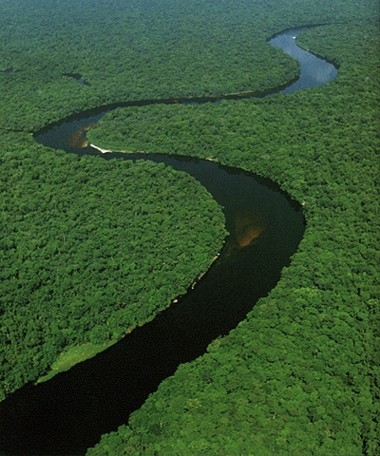
I got the river picture from here.